



History to the Touch: Instruments of Progress
Primary tabs
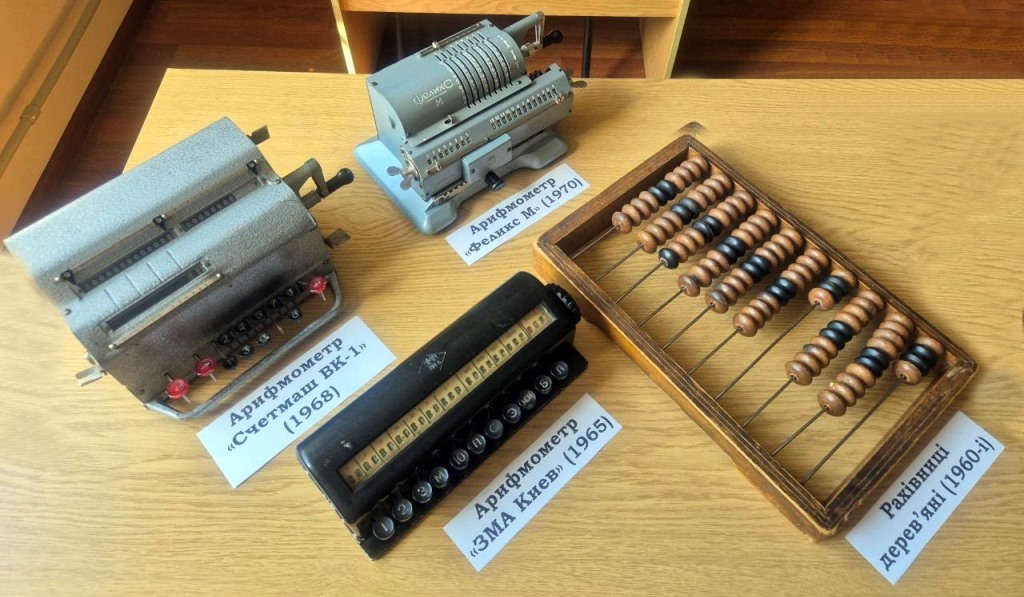 We invite everyone to visit the mini-exhibition of rare computing equipment “History to the Touch: Instruments of Progress.” The exhibition is presented in the Scientific Publications Lending Department (library, 4th floor, room 45)
From the History of Technology:
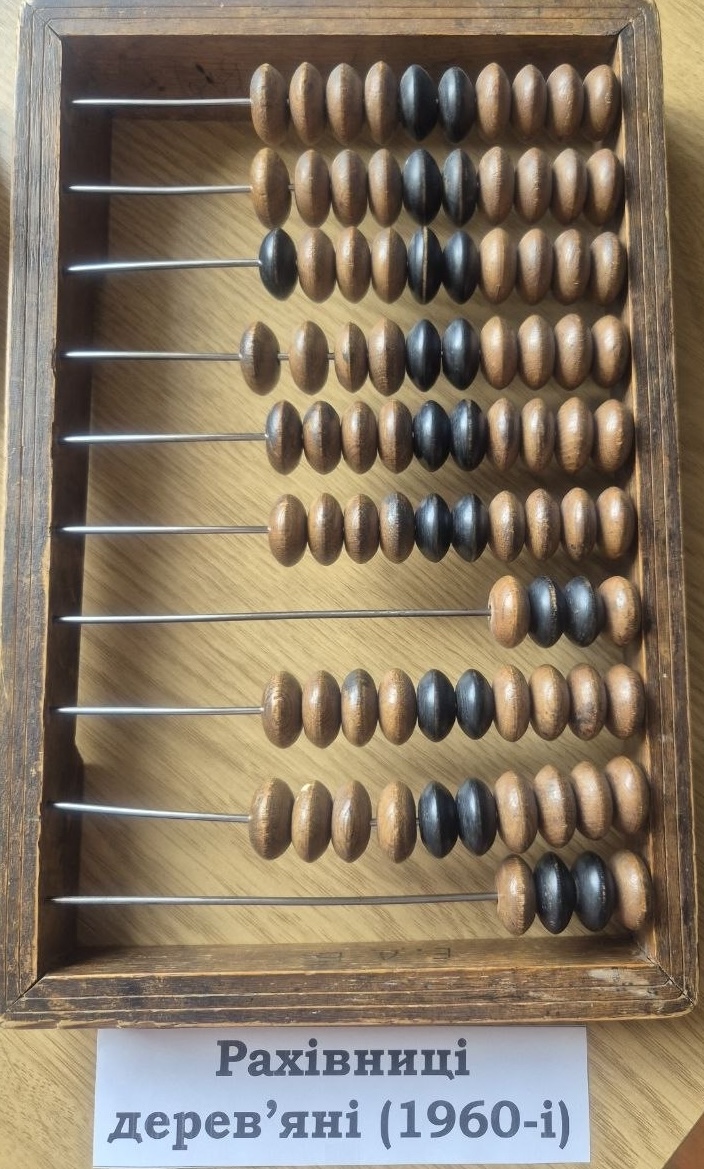 Abacus – a simple mechanical device (a counting board with beads) used for performing arithmetic calculations, originating from the Chinese suanpan. It consists of a frame with several rods; beads are strung on them, usually 10 on each rod. The abacus is one of the earliest computing devices and was widely used in trade and accounting until the end of the 20th century, when it was replaced by calculators. It is still used for teaching arithmetic to preschool and school-age children and is sometimes used by older generations in trade.
Arithmometer (from Greek αριθμός — “number,” “calculation” and Greek μέτρον — “measure,” “meter”) — a desktop (or portable) mechanical calculating machine designed for precise multiplication and division, as well as addition and subtraction. Most arithmometers were desktop or “lap-held” (like modern laptops), with pocket models being rare. This distinguished them from large floor-standing calculating machines.
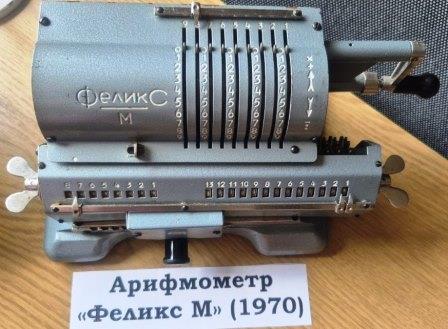 "Felix" – the most widespread arithmometer in our country. It was produced from 1929 to 1978 with a total output of several million machines. In total, more than two dozen modifications of the arithmometer were created.
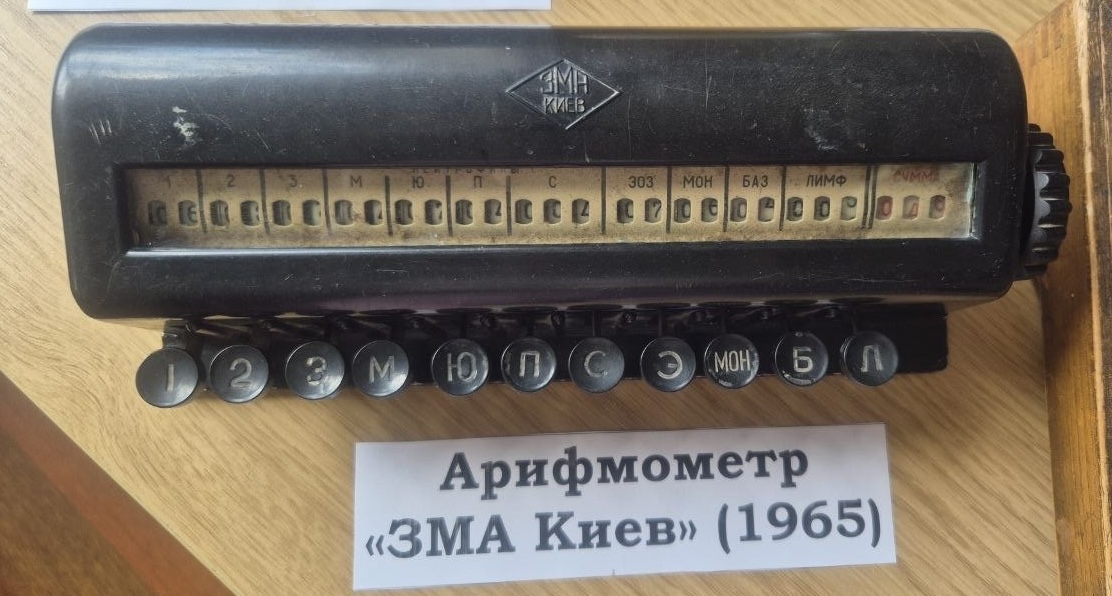 "ZMA Kyiv" – a mechanical leukocyte differential counter, rather than a classical mathematical arithmometer. The device was manufactured at the Kyiv Medical Equipment Plant (ZMA) and used in laboratories for counting different types of blood cells.
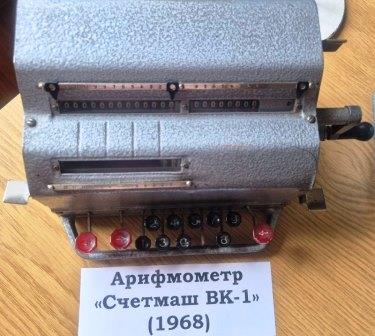 "Schetmash VK-1" – a mechanical calculating device produced at the “Schetmash” plant in the 1950s–1960s. The weight of the machine is 6 kg. It can perform four arithmetic operations – addition, subtraction, multiplication, and division.
